What to Do After a Motorcycle Accident in Denver: Step by Step
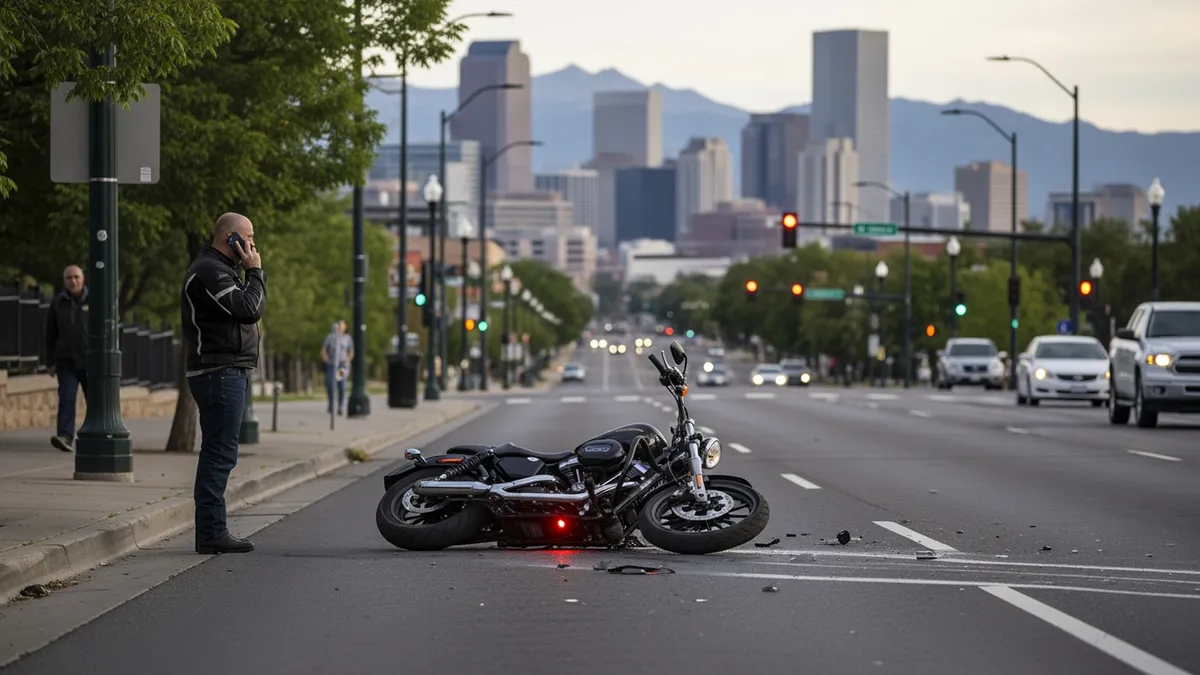
One minute you are rolling south on I-25 with the downtown skyline in your mirrors. The next, a driver drifts into your lane, and you are on the pavement wondering what just happened. In that first hour, adrenaline is doing the thinking for you, and the choices you make can shape both your recovery and your claim for months.
Get Out of Danger, Then Get It On the Record
Before anything else, your safety comes first, because traffic on roads like I-25, I-70, and C-470 does not stop just because you went down. If you can move without making an injury worse, get yourself and your bike out of live lanes and onto the shoulder or median. If you feel any numbness, sharp back or neck pain, or you cannot move a limb, stay put and wait for help, since a heavy bike is not worth a spinal injury. Turn off the engine if you safely can to cut fuel and fire risk, and keep your helmet on until medical help checks you. Remember that on Front Range roads a downed rider can be hard to see, especially in low afternoon light or a sudden mountain storm rolling in off the foothills. Once you are safe, call 911 for police and, if anyone is hurt, an ambulance. A Colorado traffic crash report from Denver Police, the Colorado State Patrol, or the local sheriff is one of the most important documents your case will ever have. Report every symptom, even pain or dizziness you think will pass, because adrenaline hides serious injuries. Give the facts plainly, without guessing, apologizing, or announcing that you are okay on the record. Ask the officer how to obtain the report and note the responding agency and case number. A same-day report closes the door on an insurer later claiming the crash was your fault or never happened.
Build Your Record and Get Treated the Same Day
Memories fade and the road gets cleaned up fast, so if you are physically able, gather what you can while it is fresh. Photograph your injuries, both vehicles, skid marks, debris, the road surface, traffic signals, and the wider intersection. Get the driver's name, phone, license, plate, and insurance details, which matters even more here because that driver may be carrying only bare minimum coverage. Collect names and phone numbers from anyone who saw it, since independent witnesses are powerful when a driver later changes their story. Note nearby cameras too, because businesses along Colfax Avenue and Federal Boulevard, doorbell cameras, and dashcams may have caught the crash before the footage is overwritten. If you were knocked out or too hurt to gather any of this, do not worry, because a lawyer and the police can reconstruct a great deal after the fact. Just as important, see a doctor the day of the crash even if you feel like you can walk it off. A gap between the wreck and your first treatment is the first thing an adjuster points to when they want to argue you were not really hurt. Colorado is an at-fault state that repealed no-fault back in 2003, so there is no PIP layer of medical coverage that pays your first bills no matter who caused the crash. That means the at-fault driver's liability coverage, and your own uninsured and underinsured motorist coverage, sit at the center of a rider's case from day one. Get treated, follow through on every appointment, and keep every bill and record.
Watch the Insurer, Mind the Clock, and Guard Your Fault Share
Expect a call from the other driver's insurer, sometimes within a day or two, and remember that they are friendly but not on your side. You are not required to give a recorded statement, and anything you say can be trimmed and used against you later. Do not accept a fast settlement, because an early check often shows up before you even know the full extent of your injuries, and once you sign, that is the end of it. Do not post about the crash either, since a photo of you smiling at a barbecue becomes their exhibit that you are fine. Keep it simple and tell them you are getting treatment and that they can speak with your attorney. Colorado gives you three years from the date of a motor-vehicle crash to file most injury claims, which is longer than a lot of states, but three years feels like forever until months disappear into surgeries and physical therapy, so do not treat it as a reason to wait. Colorado also follows a modified comparative negligence rule with a 50 percent bar. If you are found 50 percent or more at fault, you recover nothing, and if your share is less than that, your recovery is reduced by your percentage of fault. Insurers know this and lean hard on tired stereotypes about riders to push your share of blame up. Building your record early is how you fight that.
- ✓ Get to safety first. Clear live lanes if you can, but never push through a spine or neck injury to move a heavy bike.
- ✓ Call 911 and get the report. A same-day Colorado crash report anchors that a driver was at fault and the crash was real.
- ✓ Document the scene. Photos, driver and insurance details, witnesses, and nearby cameras before anything disappears.
- ✓ Treat the same day. Same-day care protects your health and ties your injuries to the crash before an adjuster can argue otherwise.
- ✓ Say little to insurers. No recorded statement, no quick check, and no social posts until you know what your claim is worth.
You Do Not Have to Sort This Out Alone
If you have been hurt in a motorcycle crash anywhere on the Front Range, you do not have to untangle Colorado's fault rules and the insurance runaround on your own. Get straight answers about your options before you talk to any insurer, and let someone who rides handle the record, the adjusters, and the fight for what your claim is truly worth.
Have questions after a wreck? Scott O'Sullivan and the motorcycle accident lawyers in Denver at Rider Justice (riderjustice.com) review rider claims and explain your options.