Uninsured & Underinsured Motorist Coverage: A Colorado Rider's Real Backstop
Ask most Denver riders what protects them after a crash and they will point to the other driver's insurance. That answer works only if the other driver actually has coverage, and only if that coverage is enough to pay for what a serious motorcycle wreck costs. On Colorado roads, neither of those things is guaranteed.
What UM and UIM Actually Cover
Uninsured and underinsured motorist protection are two related coverages that ride on your own auto or motorcycle policy, and they exist for exactly the situations that leave riders exposed. Uninsured motorist coverage, or UM, covers you when the at-fault driver has no insurance at all, including many hit-and-run situations where the driver is never found. Underinsured motorist coverage, or UIM, covers the gap when the at-fault driver does have insurance, but their limits are too low to pay for your injuries. A motorcycle crash can produce medical bills, lost income, and a long recovery that far exceed a bare minimum policy, and UM and UIM step into the shoes of the driver who could not, or would not, pay. For a rider, this is often the single most important line on the policy, because you are the one most likely to be seriously hurt and least likely to be fully paid by a stranger's minimum coverage.
Why Colorado's Minimum Limits Fall Short for Riders
Colorado sets the floor for liability coverage at 25/50/15. That means a driver can legally carry as little as 25,000 dollars of bodily injury coverage per person, 50,000 dollars per crash, and 15,000 dollars for property damage. Those numbers were never designed with a serious motorcycle injury in mind. Medical costs move fast, and a single ambulance ride down from the high country plus surgery can approach or pass a minimum limit before rehab even begins. Riders get hurt worse, because without a steel cage around you the same collision that dents a car can put a rider in the hospital for weeks. And minimum coverage is common, because many drivers buy exactly the least the law allows, which leaves a large gap when they cause real harm. When the at-fault driver's limit runs out, the injured rider is the one left holding the difference unless UIM is there to close it.
The Uninsured Driver Problem on Denver Roads
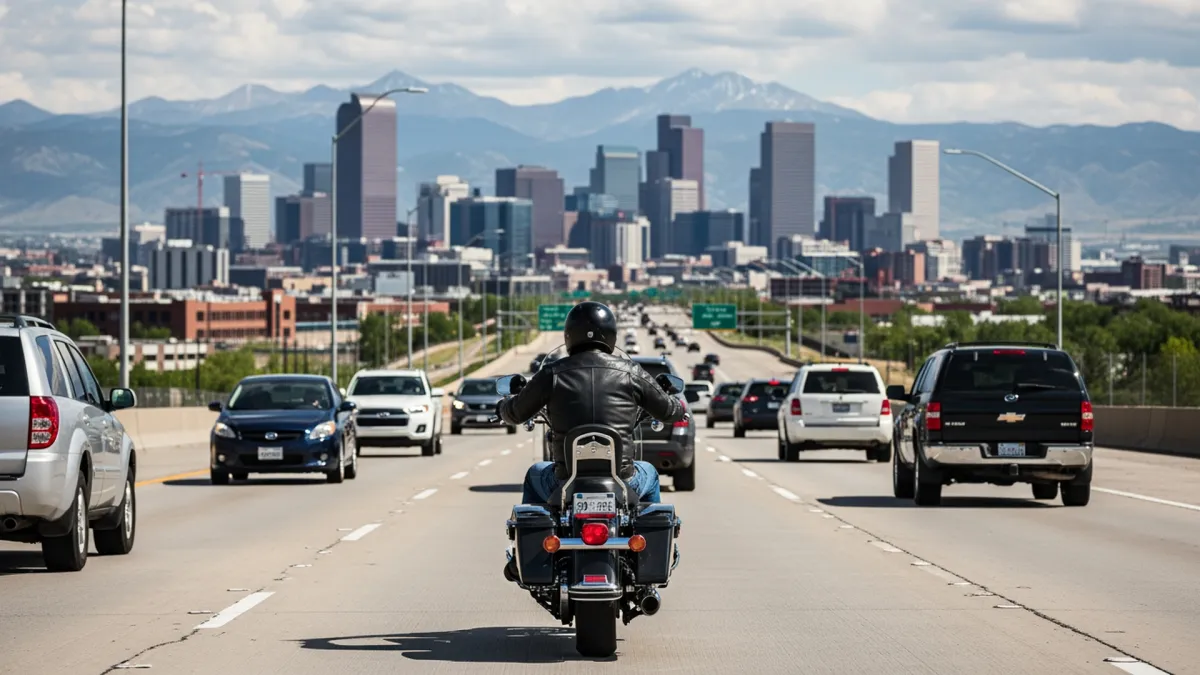
Not every driver on I-25, Peña Boulevard, or E-470 is carrying insurance at all. When an uninsured driver runs a light or turns across your lane, there is no policy on the other side to pursue, and that is the exact scenario UM was built for. Hit-and-run makes it worse. A driver who clips a motorcycle and keeps going leaves the rider on the pavement with no plate, no name, and no insurer to bill. In many of those cases, your own uninsured motorist coverage is treated as the substitute for the coverage the fleeing driver should have had. Without it, a rider can do everything right and still have no one to turn to. This is why the coverage you control on your own policy matters more than the coverage you hope the other driver carries, because the driver who hurt you is the one part of the equation you never get to choose.
What This Means Before You Ever Crash
The most important decision about UM and UIM happens long before any crash, when you choose your limits. A few points are worth understanding as a Colorado rider so that the day after a crash is not when you learn what you actually bought.
- ✓ Buy more than the minimum where you can. Higher UM and UIM limits are usually far cheaper than they feel, and they protect the person most likely to be hurt in a motorcycle wreck.
- ✓ Check how your coverage is structured. Policies can be set up in ways that change how much is really available, and riders are often surprised by what they actually have.
- ✓ Do not assume the other driver is covered. Your own coverage is the only part of the equation you control.
- ✓ Read the policy before you need it. The day after a crash is the wrong time to learn your limits were set at the floor.
Insurers Fight UM and UIM Claims Too
Here is the part that surprises many riders. When you file a UM or UIM claim, you are dealing with your own insurance company, and it does not simply write a check because you paid your premiums. It becomes the party on the hook, which means it has the same incentive as any other insurer to question your injuries, dispute the value of your claim, and argue that you were partly at fault. Expect the same scrutiny of your medical records you would face from a stranger's insurer. Expect the carrier to lean on Colorado's fault rule, because if it can push your share of blame to 50 percent or more it can try to deny the claim entirely. And expect a low first offer, because the fact that it comes from your own company does not make it fair. Knowing that the claim can turn adversarial is half the battle, and being ready for it is the other half.
Scott O'Sullivan and the motorcycle accident lawyers in Denver at Rider Justice represent riders hurt by negligent drivers. If you have questions after a crash, their team is here to help.