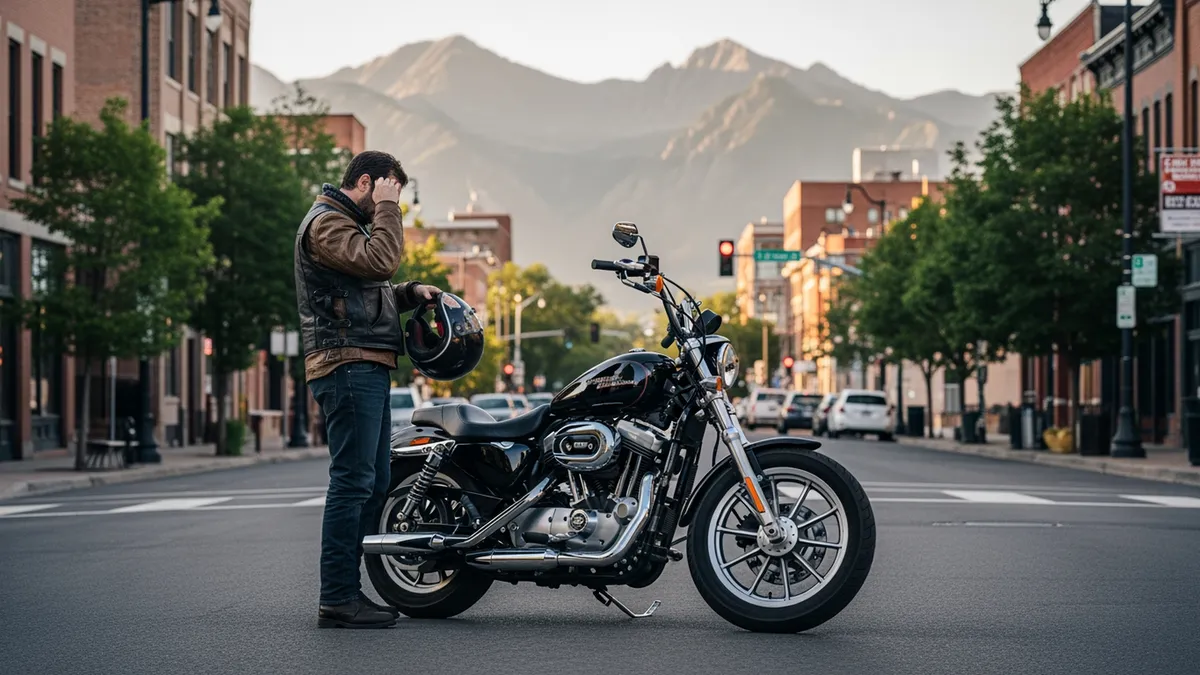
Colorado Motorcycle Helmet Law: Who Has to Wear One
Few topics generate more confusion among Denver riders than the helmet law. Some believe Colorado requires a helmet for everyone. Others assume that riding without one bars you from recovering after a crash. Both beliefs are wrong, and getting the real rule straight matters, because insurers will happily fill the gap in your knowledge with a version that helps them and hurts you.
What the Law Actually Requires
Strip away the myths and the rule is short. Colorado ties the helmet requirement to age, not to experience, engine size, or road type. Riders and passengers who are younger than 18 must wear a helmet, and that applies to the operator and any passenger under that age. Adults who are 18 and older may legally ride without a helmet, and the choice is yours. Eye protection is a separate requirement that applies regardless of age, so goggles or a face shield are expected of every rider, and a windshield alone generally does not satisfy this. That is the whole framework. There is no separate rule for the interstate versus a canyon road, and no exemption that changes based on how long you have been riding. The rule is narrower than many people think, and the details are exactly where riders get tripped up when an insurer starts asking questions after a crash.
Legal to Skip Does Not Mean Smart to Skip
The law lets an adult ride bare-headed, but the physics of a crash do not care what the statute allows. A rider going down at speed on I-25 or losing traction on gravel in Deer Creek Canyon faces the same head-injury risk whether or not the law required a helmet that day. Head injuries are life-changing, and a helmet is one of the few pieces of gear that directly reduces the severity of the injury most likely to end a rider's independence. Front Range conditions are unforgiving, and sudden storms, wildlife on the Peak to Peak Highway, and rockfall in the canyons all raise the odds of a sudden get-off. Your choice is still yours to make, and the point here is not to lecture. It is that legal and safe are two different questions, and only one of them is answered by the statute. Riding without a helmet is a legal choice for an adult in Colorado, and whether it is the choice you want to live with is a separate decision entirely.
How Helmet Use Can Affect Your Injury Claim
This is where the helmet law quietly connects to your wallet. Even though an adult is not required to wear a helmet, an insurer may still try to use the absence of one against you after a head or neck injury. The argument they reach for is that your own choice contributed to how badly you were hurt. Remember Colorado's fault rule. Your recovery is reduced by your share of fault, and if your share reaches 50 percent or more, you recover nothing, so anything an insurer can use to push your fault percentage up is a threat to your claim. Expect the you-would-have-been-fine claim, where they argue a helmet would have prevented or reduced a head injury so you should absorb part of the cost. Expect the blanket blame attempt, where they try to stretch a helmet argument across your entire claim, even for injuries that have nothing to do with your head. And expect the character angle, where they imply that a rider without a helmet was careless in general, hoping the impression bleeds into the fault analysis. None of these are automatic wins for the insurer, and the facts of your crash matter a great deal, but you should know the argument is coming so it does not catch you off guard.
What to Do After a Crash, Helmet or Not
Whether or not you were wearing a helmet, the steps that protect your claim are the same, and they start immediately. The goal is to keep the focus where it belongs, on the driver who caused the crash, rather than letting a debate about headgear swallow your claim.
- ✓ Get medical care right away. Document every injury, especially anything involving your head, neck, or spine.
- ✓ Do not volunteer conclusions. Avoid telling an adjuster that your injuries are your own fault for any reason, including gear.
- ✓ Preserve your gear. Keep your helmet, jacket, and eye protection, and photograph everything before it gets tossed or repaired.
- ✓ Get the fault story straight. The driver who turned across your lane caused the crash, and that fact should stay at the center of the case.
- ✓ Talk to a lawyer before you sign anything. A recorded statement or a quick settlement can lock in a version of events that helps the insurer.
The Bottom Line for Denver Riders
Colorado's helmet law is simpler than the rumors suggest. Under 18 means a helmet is required. Eighteen and older means it is your choice, and eye protection is required either way. What is not simple is how an insurer may try to use that choice against you when you are hurt. A carrier that cannot dispute who caused the crash will often pivot to your gear, hoping to shift a few points of fault your way and shrink what it owes, and under a 50 percent bar even a modest shift can matter. Knowing the real rule, and knowing the argument the other side will make, puts you in a far stronger position than a rider who is guessing. The statute answers only the narrow question of what you were required to wear. It does not decide who is responsible for the harm, and it should never be allowed to quietly take over a claim that belongs squarely on the driver who caused the wreck.

Led by Scott O'Sullivan, Rider Justice in Denver fights for injured motorcyclists. Reach out to their Denver motorcycle accident attorneys anytime you need real answers.